How to lower blood pressure naturally
Seven lifestyle steps that research shows can lower blood pressure: the DASH eating plan, less sodium, activity, weight loss, less alcohol, sleep, and checking your numbers at home.
On this page
If you want to know how to lower blood pressure naturally, the steps with the best evidence are everyday ones: eat the DASH way, cut back on salt, move more, lose some weight if you carry extra, drink less alcohol, sleep well, and check your numbers at home. Each step on its own lowers blood pressure by a few points, and they stack. In one trial, two of them together (the DASH diet plus less salt) lowered the top number by 11.5 points on average in people with high blood pressure, compared with a typical salty American diet.
If you already take blood pressure medicine, keep taking it exactly as prescribed while you make these changes. Don’t stop it, skip doses, or change the dose on your own, even if your home readings improve. Talk to your doctor first. The National Heart, Lung, and Blood Institute (NHLBI) says to keep up your healthy lifestyle changes while you take these medicines, because the two work together.
What counts as high blood pressure?
A blood pressure reading has two numbers. The top (systolic) number is the pressure when your heart beats. The bottom (diastolic) number is the pressure between beats. So 120/80 means a systolic of 120 and a diastolic of 80, measured in millimeters of mercury (mm Hg).
The CDC says high blood pressure means readings that are consistently at or above 130/80 mm Hg. Here are the CDC categories:
| Category | Top number (systolic) | Bottom number (diastolic) | |
|---|---|---|---|
| Normal | less than 120 | and | less than 80 |
| Elevated | 120 to 129 | and | less than 80 |
| Stage 1 hypertension | 130 to 139 | or | 80 to 89 |
| Stage 2 hypertension | 140 or higher | or | 90 or higher |
| Severe hypertension | higher than 180 | and/or | higher than 120 |
High blood pressure usually has no symptoms, MedlinePlus notes, so regular checks are the only way to know. You can type your own numbers into our blood pressure chart and checker to see which category they fall in.
1. Follow the DASH eating plan
DASH stands for Dietary Approaches to Stop Hypertension. The NHLBI describes the DASH eating plan as flexible, with no special foods needed. It asks you to:
- Eat plenty of vegetables, fruits, and whole grains.
- Include fat-free or low-fat dairy, fish, poultry, beans, nuts, and vegetable oils.
- Limit foods high in saturated fat, such as fatty meats, full-fat dairy, and coconut, palm kernel, and palm oils.
- Limit sugar-sweetened drinks and sweets.
For a 2,000-calorie day, the NHLBI plan works out to about 6 to 8 servings of grains, 4 to 5 of vegetables, 4 to 5 of fruit, 2 to 3 of low-fat dairy, and 6 or fewer of meat, poultry, and fish. Add 4 to 5 servings a week of nuts, seeds, and dry beans or peas, and keep sweets to 5 or fewer a week.
In the DASH-Sodium trial (New England Journal of Medicine, 2001), 412 adults ate set diets for 30 days at a time. Compared with a typical American diet high in sodium, the DASH diet with low sodium lowered systolic blood pressure by 7.1 mm Hg on average in people without hypertension and by 11.5 mm Hg in people with it. The NHLBI says DASH combined with a low-salt eating plan can be as effective as medicines in lowering high blood pressure. If you take blood pressure medicine, keep taking it while you change how you eat.
2. Cut back on sodium
Americans eat more than 3,300 mg of sodium a day on average, the CDC says. The advice for teens and adults is less than 2,300 mg a day. The DASH plan uses that same 2,300 mg limit and notes that 1,500 mg a day lowers blood pressure even further.
Salt mattered in the DASH-Sodium trial on its own, too. Each step down in sodium lowered blood pressure on both the typical diet and the DASH diet, in people with and without hypertension, in women and men.
Most of the sodium you eat doesn’t come from the salt shaker. The CDC says most of it comes from processed and restaurant foods. These habits go after those sources:
- Reading the sodium line on food labels and picking the lower number.
- Cooking at home more often, where you control the salt.
- Going easy on packaged soups, deli meats, frozen meals, and fast food.
3. Aim for a healthier weight
Extra body weight is a strong risk factor for high blood pressure, and losing some of it brings blood pressure down. In a 2003 review of 25 trials with 4,874 people, published in the journal Hypertension, an average weight loss of about 5 kg (11 pounds) lowered blood pressure by about 4.4/3.6 mm Hg. That works out to roughly 1 mm Hg for every kilogram (2.2 pounds) lost.
You don’t need to reach a “perfect” weight to see a change. The NHLBI says that for adults with overweight or obesity, losing 3% to 5% of your weight can improve blood pressure. For a 200-pound person, that’s 6 to 10 pounds. Our BMI calculator gives you a quick starting point.
4. Move more, starting small
The CDC recommends that adults get 150 minutes of moderate activity a week, such as brisk walking, plus at least 2 days of muscle-strengthening activity. That can be 30 minutes a day, 5 days a week.
A 2013 review of 93 trials in the Journal of the American Heart Association found that endurance exercise like walking, cycling, or swimming lowered systolic blood pressure by 3.5 mm Hg on average. In people who already had hypertension, the drop was bigger, about 8.3/5.2 mm Hg. Strength training helped too, and a small number of studies on isometric exercise (holding a muscle tight without moving, such as a hand grip) showed the largest drops.
If you’re starting from zero, the NHLBI says even 10 minutes of walking a day may help, and so does sitting less. Ask your doctor what level of activity is right for you before you start a new exercise program.
5. Drink less alcohol
If you drink, how much matters. A 2017 review of 36 trials in Lancet Public Health found that cutting back made little difference for people who had 2 or fewer drinks a day. For people who drank more than 2 drinks a day, cutting back lowered blood pressure, and the drop was largest for people who had 6 or more drinks a day and cut their intake by about half: about 5.5/4.0 mm Hg.
The NHLBI advises you to avoid or limit alcohol and to talk with your doctor about how much you drink, because you may need to limit it or stop.
6. Sleep well, manage stress, and don’t smoke
The NHLBI’s list of heart-healthy changes for high blood pressure goes beyond food and exercise. Adults need 7 to 9 hours of sleep a day, and regular habits help: go to bed and get up at the same times, keep a calming bedtime routine, and keep your bedroom cool and dark.
For stress, the NHLBI points to relaxation methods, talking with a counselor, or joining a support group. If you smoke, quitting is part of the plan too. The National Cancer Institute’s quitline gives free help at 1-877-44U-QUIT (1-877-448-7848).
Changing many habits at once is hard. The NHLBI suggests making one change at a time and adding the next when the first one feels easy.
7. Check your blood pressure at home
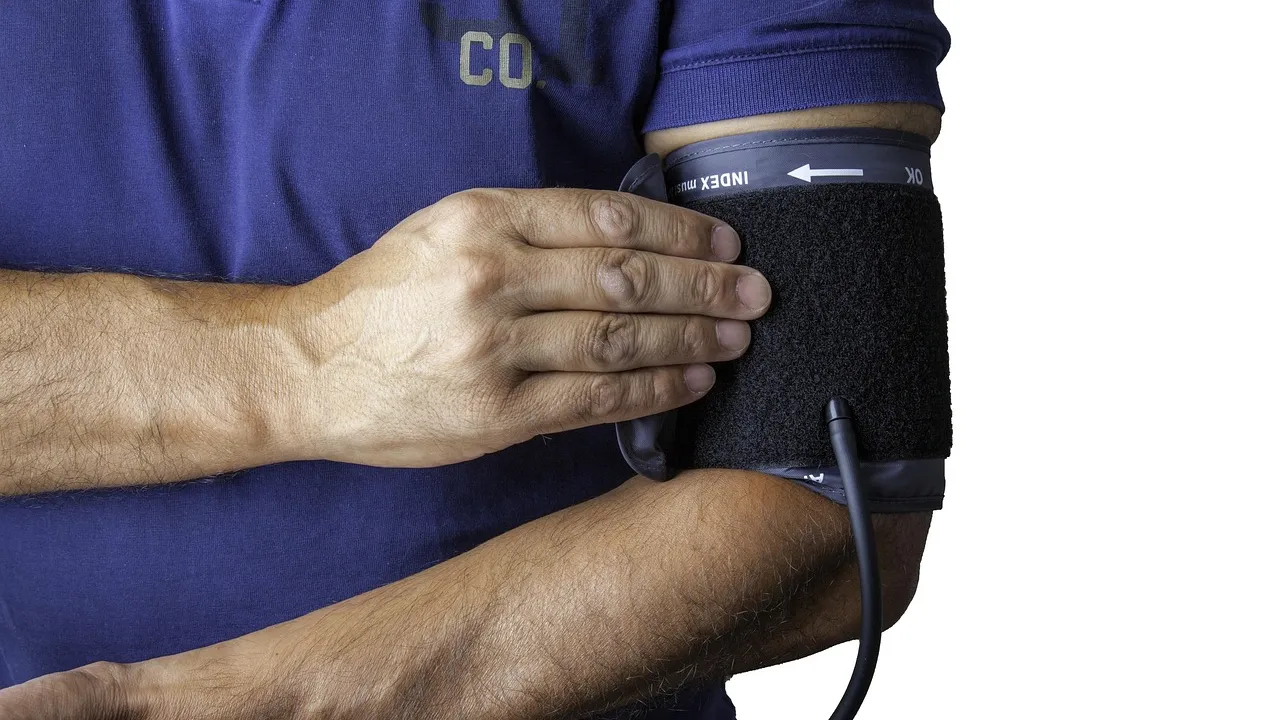
Home readings show whether your changes are working, and the NHLBI says your doctor may ask you to take them. The CDC gives these steps for an accurate reading:
- Don’t eat or drink anything for 30 minutes before.
- Empty your bladder.
- Sit in a chair with your back supported for at least 5 minutes.
- Keep both feet flat on the floor and your legs uncrossed.
- Rest your arm on a table so the cuff is at chest height, on your bare upper arm, snug.
- Don’t talk while it measures.
- Take at least 2 readings, 1 or 2 minutes apart, at the same time each day, and write them down.
Bring your log to your appointments. Your doctor can use it to decide whether your treatment needs to change. Never adjust your medicine yourself based on home numbers.
When to get help right away: The NHLBI says readings above 180/120 mm Hg are dangerously high and need immediate medical attention. Call 911 if you have a sudden, severe headache, sudden severe pain in your chest, back, or belly, trouble breathing, numbness or weakness, a sudden change in vision, or trouble speaking.
You don’t have to do everything at once. Pick one step, such as a daily walk or cooking with less salt, and stick with it for a few weeks while you track your numbers. Then add the next. For more on blood pressure and heart health, see all our blood pressure and heart guides.
This guide is general information, not medical advice. Talk to your doctor before you change your diet, your exercise, or your medicines. Read how we write and check our guides in our editorial policy.
Sources
- High Blood Pressure: Treatment, National Heart, Lung, and Blood Institute (NHLBI), NIH
- DASH Eating Plan, National Heart, Lung, and Blood Institute (NHLBI), NIH
- Living With High Blood Pressure, National Heart, Lung, and Blood Institute (NHLBI), NIH
- About High Blood Pressure, Centers for Disease Control and Prevention (CDC)
- Measure Your Blood Pressure, Centers for Disease Control and Prevention (CDC)
- About Sodium and Health, Centers for Disease Control and Prevention (CDC)
- Adult Activity: An Overview, Centers for Disease Control and Prevention (CDC)
- High Blood Pressure, MedlinePlus, National Library of Medicine
- Effects on blood pressure of reduced dietary sodium and the Dietary Approaches to Stop Hypertension (DASH) diet, Sacks FM and others, New England Journal of Medicine, 2001 (PubMed)
- Exercise training for blood pressure: a systematic review and meta-analysis, Cornelissen VA and Smart NA, Journal of the American Heart Association, 2013 (PubMed)
- Influence of weight reduction on blood pressure: a meta-analysis of randomized controlled trials, Neter JE and others, Hypertension, 2003 (PubMed)
- The effect of a reduction in alcohol consumption on blood pressure: a systematic review and meta-analysis, Roerecke M and others, Lancet Public Health, 2017 (PubMed)